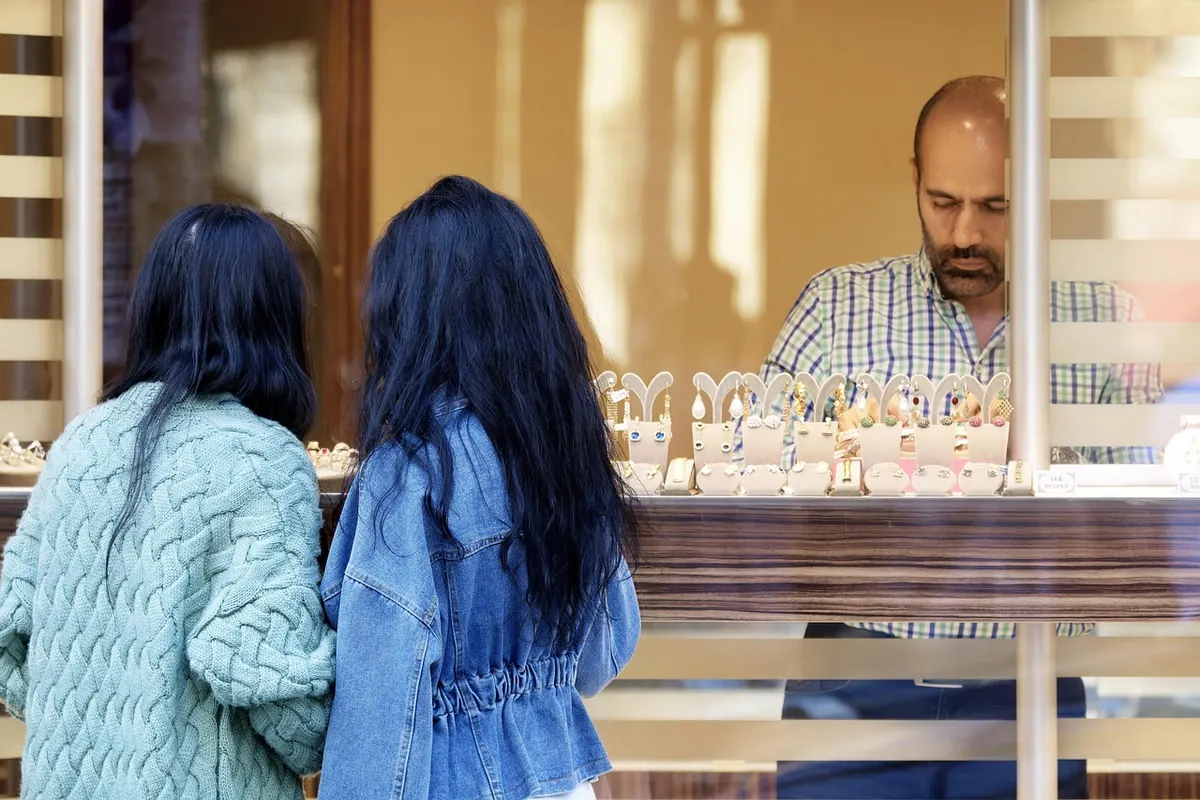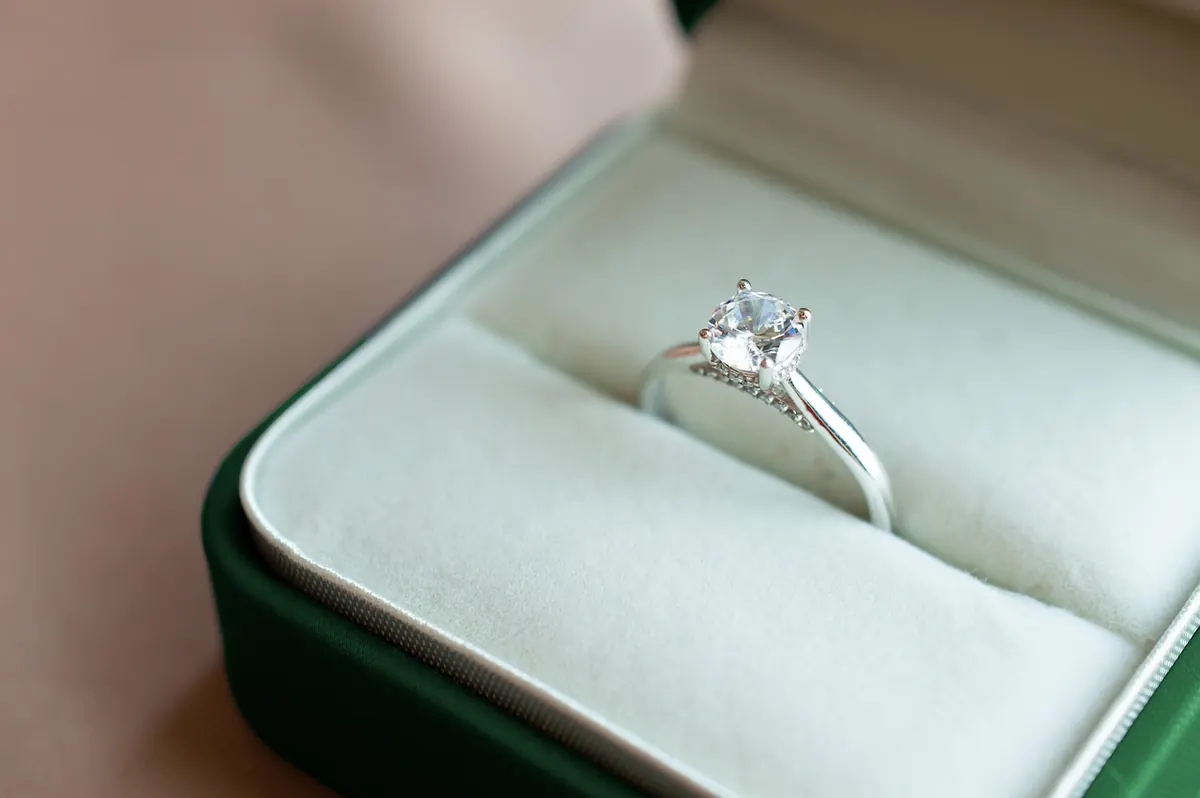
An engagement ring is worn every day, which makes it one of the few purchases where sentiment and practicality have to share the decision. A deep blue sapphire or a warm peachy morganite can be completely right — but the stone you fall for in a shop window has to survive door handles, gym sessions and the washing-up. Here is how to work through the choice in a sensible order.
Start with how the stone will live, not just how it looks
Hardness is measured on the Mohs scale, and the numbers are more useful than they look. Diamond sits at 10, sapphire and ruby at 9, spinel around 8. Anything at 7 or above will resist everyday scratching reasonably well; below that, a ring worn daily will start to show it. Amethyst and citrine, both quartz, come in at 7, opal around 5.5 to 6.5, and pearl lower still.
Hardness is not the whole story, though. Emerald is 7.5 to 8 on paper but is usually full of internal inclusions, so it chips and cracks more readily than that number suggests. Tanzanite has one direction of cleavage, which means a sharp knock in the wrong place can split it. Emeralds, opals, pearls, tanzanite and moonstone are all beautiful — just be honest about whether the ring will be worn to work every day or saved for evenings and anniversaries.
For daily wear, sapphire, ruby, spinel, diamond, moissanite and alexandrite are the forgiving choices. If you love a softer stone, set it in a bezel — a rim of metal wrapped around the edge — and you buy a lot of protection at the cost of a little sparkle.
Work out a budget you can genuinely live with
Gemstone pricing swings far more than most people expect. Colour, size, clarity, origin and treatment all move the number, and two sapphires of the same size can differ in price by a wide margin. Treat the old "three months' salary" rule as marketing rather than arithmetic; the right figure is whatever you can spend without borrowing painfully.
Lab-grown stones and pre-owned rings stretch a budget a long way, and there is no shame in either. Spend where you will notice it: the stone itself, and a setting that holds it securely. A simpler band leaves more money for the gem. Get quotes from at least three jewellers and ask what is included — sizing, engraving, a first polish, a valuation for insurance. If you are borrowing to buy, speak to an independent financial adviser before you sign anything.
Metals, settings and practical protection
The setting matters as much as the stone. A four-claw setting shows more of the gem but leaves the corners exposed; six claws hold a softer or larger stone more securely. A bezel, or a halo with a metal gallery underneath, protects the girdle. Pavé and channel settings look lovely but are harder to resize and can lose small stones. Tension settings rely on the spring in the metal, so they are not the place for a brittle gem.
- Platinum — heavy, dense, naturally white, and it wears to a soft matte finish rather than losing metal.
- 18ct gold — richer colour and softer than 9ct, but fine for most settings.
- 9ct gold — harder and tougher for everyday knocks, though the colour is paler.
- White gold — usually plated with rhodium, which needs re-plating every year or two to stay bright.
- Rose and yellow gold — warm, flattering with morganite, peach sapphire and green stones, and it hides small scratches well.
In the UK, items sold as gold, silver, platinum or palladium above a small weight threshold must carry an assay office hallmark. Look for one, and check the maker's mark too. A jeweller who is happy to show you the hallmark and explain what it means is usually a jeweller worth buying from.
Get the UK ring size right
UK sizes run in letters, usually A to Z with half sizes in between, and continue past Z as Z+1, Z+2 and so on. Sizing is where most online purchases go wrong, because fingers change size with temperature, time of day and even the salt in your food.
- Measure in the afternoon, at room temperature — fingers are smallest in the morning and in the cold.
- Check the knuckle as well as the base. The ring should pass the knuckle with slight resistance and then sit snugly without spinning.
- Ask about band width. A 4mm band feels tighter than a 2mm band in the same size, so a wide band may need a half size up.
- Be sized by a jeweller in person where you can, using the same band width as the ring you are buying.
- Get the resize policy in writing before you order, and never guess a size from a ring that is worn on a different finger.
Sizing a finished gemstone ring is possible but limited. Full eternity bands and channel-set styles often cannot be resized at all, and some settings cannot be altered without putting the stone at risk.
Insure it and keep the paperwork together
Insure the ring before it is worn, not after. You will need a valuation for replacement cost, which is not the same as the price you paid, from the retailer or a qualified valuer, plus a photograph, receipt or gemstone report. Most people add the ring to their home contents as a specified item, though a standalone policy is
Photo: PRISCILAFLORES / Pixabay